Saturday, December 31, 2022

Genealogy Resolutions for 2023

As a genealogist, you've probably given some thought as your research goals for 2023. If you're still thinking about what you'll do genealogy-wise in the New Year, there are plenty of suggestions from plenty of websites. Among those appearing on most websites are:

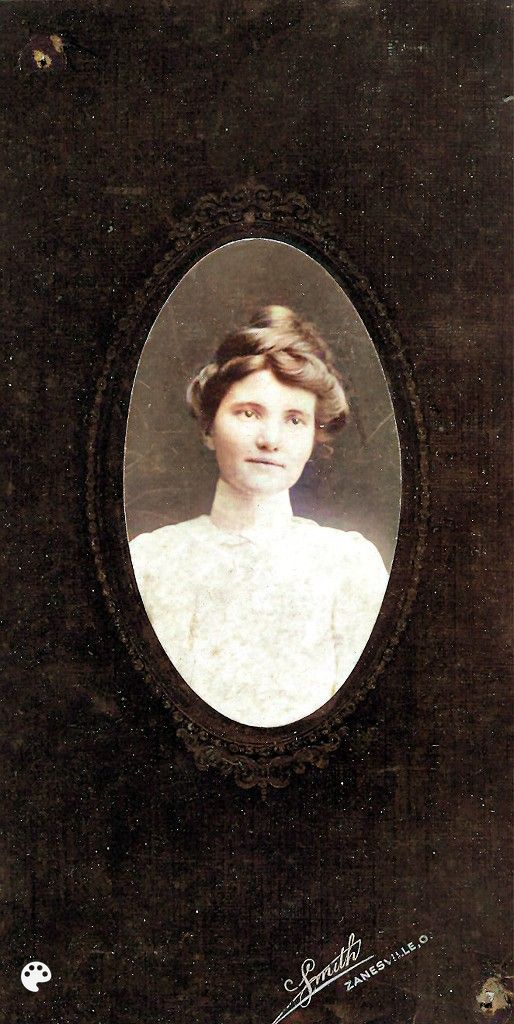
Bertie Armstrong McLean,
1876-1970


1. Backup your database. Most genelogy programs claim to backup your information automatically, and they do, but just as a precaution, at least once a month, do this manually. Also, if your budget allows, consider having your whole system backed-up on a server, such as Backblaze, an inexpensive and reliable (I've had to retrieve "lost" data from the server) cloud back-up/storage system. Best Cloud Backup Services for 2023

    2. Interview older relatives. This might be expanded to include neighbors or friends of your relatives who have passed. This is a resolution not to be put off. Trust me, you will kick yourself if you fail to do this. 

3. Make a road trip to places associated with your ancestors. This can be combined with interviews, but is a stand-alone resolution. Don't confine your explorations to cemeteries. There's nothing like the walking literally in the steps of an ancestor. Go see not just family homes (or the sites), but walk the streets of the town or nearby town and think about your ancestor walking there. Get a feel for what your ancestor saw and heard. Take photos (and then be sure you label them when you get home!). 
    If you can't make a road trip, use Google Earth to find an address. If there's a "street view", you'll be able to virtually follow in an ancestor's footsteps. It's actually pretty exciting.
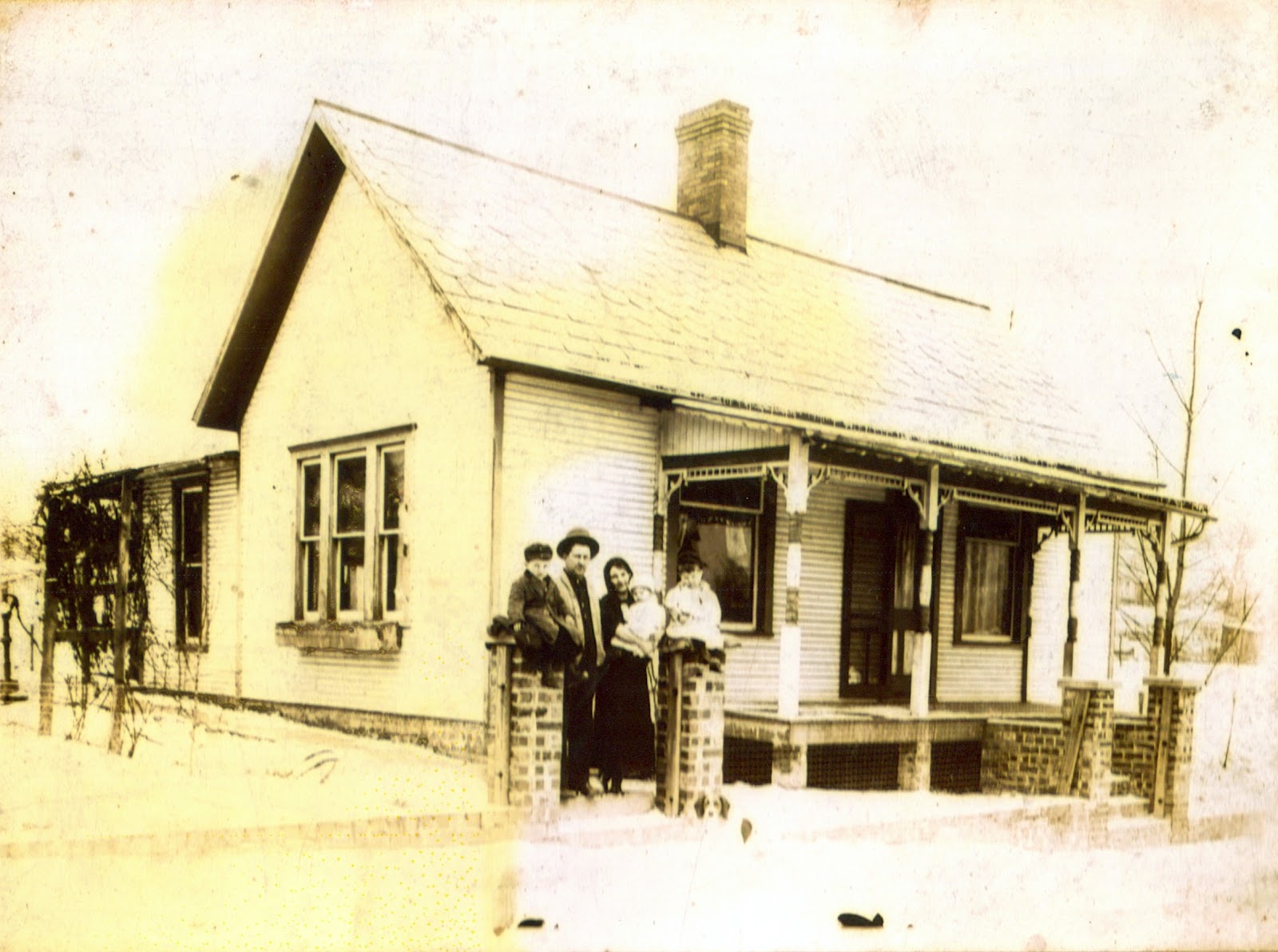

McLean home, Roseville, Ohio, 1915
 

McLean home, Roseville, Ohio, 2015

3. Share your information. The best thing to do is to donate a copy of your genealogy to a local library and/or genealogy society. The Muskingum County Chapter of the Ohio Genealogical Society will gladly take a copy of your work. So will the Ohio Genealogical Society. So will The Allen County Public Library's Genealogy Center at Fort Wayne, IN. Don't use the excuse that no one in your family is interested. Someone in the family will be some day, and if you've donated your work to a repository, that someone can find it.
    And by the way, if you've had your DNA tested, you can use the results to identify 2nd and 3rd cousins (or their children) to whom you might offer your research. I did this with a branch of my mother's family, and now my research is in the hands of cousins I've never met and probably never will. Just knowing the work has been shared with some family member makes me feel good.


Monday, April 4, 2022

The 1950 US census--Help Wanted!

 The release of the 1950 US census is very exciting. However, if you've tried to search someone by name at the National Archives site, you've probably felt frustrated. Knowing your ancestor's enumeration district is critical, and if you don't have an address where the person lived in 1950, you can't determine the enumeration district. 

An every person name index is necessary. Unfortunately, a reliable one doesn't exist as of today. The National Archives has a computer-generated index (discussed in the previous blog), and like most such lists, it's seriously flawed. 

Family Search, Ancestry, and My Heritage are all working to provide a reliable every-name index, and they hope to have it online by May 14. Per the census bureau, there are 150,697,361 names to be indexed, so meeting the deadline is a challenge. 

But YOU can help.

As it did with the 1940 US census, FamilySearch is offering each of us a volunteer opportunity to be done from the comfort of our own homes---reviewing the OCR-generated names. Go to https://www.familysearch.org/getinvolved/1950 and you can start immediately. 

When you click on the link above, beneath the words "Indexed by computers, reviewed by people", you'll see a dropdown menu where you can choose a state to help index. As of today, you only have three choices, Oregon, Nevada. and Utah. Choose one, and you'll be taken to a screen with "Get Started" button. Click on that and it takes to a "Review Individual Names in the 1950 Census" screen. You don't need to enter a surname (unless you know someone in that state in 1950!); just press the search button. A census page image will appear. Part of a name will be highlighted in blue. The computer's "transcription" of the name appears in a box. You compare the highlighted name with the one in the box. If they match, click the match button. If you see an error, click the edit button and fix the transcription in the box then hit "Submit". If you're not sure, click the "Unsure" button. 

This sounds a lot more complex than it is. I did 40 names (with 12 corrections) in less than 10 minutes. I urge you to give it a try. If you only index 20 names, you've made it possible for 20 individuals to be found by family historians. The more of us doing this, the better the chance that in a month and a half, there'll be a reliable index to make all of our searches easier.

Thanks!


Wednesday, February 16, 2022

Finding Your People in the 1950 U.S. Census


There's a lot of excitement among family historians over the National Archive's April 1 release of the 1950 U.S. census. If you're one of those people eagerly anticipating this event, there are two things you need to do over the next two months to prepare. 

Legacy's census search tool
First, identify those in your family tree who were alive on or before April 1, 1950. Legacy Family Tree includes a Search feature that generates a list of people in the database who were alive during any particular census year--including 1950.  (I wasn't able to find if other genealogy software, such as RootsMagic or Family Tree Maker include a similar census search feature.) Once Legacy creates a list, you can save it as a spreadsheet, which then allows you to add additional columns of information, such as "Residence in 1950".
                                                                                                                                  
Knowing where an individual lived in 1950 is likely going to be critical to your search. So the second thing you need to do is locate an address (it might only be a street name) for each person or family. There are a number of resources, but telephone books will be especially useful. The Library of 
Congress has digitized a number of telephone directories Library of Congress U.S. Telephone Book Collection, Although the collection is not complete, you might just be one of the lucky ones. The address is needed to narrow your search to the Enumeration District where the family or individual lived, but even without an exact address, you can use Steve Morse One Step website to help locate likely E.D.'s Steve Morse One Step/1950 Enumeration Districts.

"My 1950 US Census Release To-do List"
from climbingmyfamilytree.Blogspot.com

Why, you're probably asking, do I need this information in order to search the 1950 census? It's because there's a possible problem with the index. Initially, the National Archives said there would be no index available at the time of the census' release. Then in December, we got the good news that there will be an index released on April 1. The potential problem lies with the fact that the indexing is being done not by humans but by a technology called Optical Character Recognition. While humans are fallible, so is technology, and indexing the 1950 census requires creating an OCR program that can "read" all the different ways in which census takers might have formed their letters as they recorded respondents' names.


You might recall the massive indexing effort done by FamilySearch for the release of the 1940 U.S. census. Over four months, 163,000 online volunteers tried to decipher good, bad, and ugly handwriting, but no one did it alone. If there were a problem reading a name, others could be called on to weigh in on the matter. An OCR program doesn't have another OCR program checking its work, so there's a lot of room for error. For example, if you know your Wilson relative was alive and well in Zanesville in 1950, you might be surprised when you can't find them in the index. That's because the OCR read the census taker's handwriting as "Nelson". 

So be prepared. Do your homework now so you can get right to work on April 1. Happy hunting.