Sunday, January 22, 2023

A Little History of Muskingum County Townships

 One of the resolutions I made for 2023 is to provide readers with a brief history of each of Muskingum County's 25 townships. The county itself was formed from Washington County on January 7, 1804. Zanesville, the county seat, served as Ohio's capital from 1810 to 1812. According to "Ohio History Central" (Ohio History Connection), the county name derives from a Native American word meaning "near the river", referring to the Muskingum River that runs through the county. Wikipedia (Muskingum County, Ohio) offers other derivatives: A Shawnee word meaning "swampy ground"; a Lenape word referring to a thorn bush specific to the area; a Native word meaning "elk's eye" and referring to the number of elk that fed along the river's banks. Since there's no clarity on the meaning of the county's name, you're free to pick the one you like best.

Muskingum County's townships were formed between 1802 and 1853, in this order:

1.   Newton                Spring of 1802

2.   Springfield           21 June 1803     

3.   Jefferson              1805

4.   Licking                1806

5.   Falls                     9 March 1808

6.   Salt Creek            9 March 1808

7.   Union                   1808

8.   Blue Rock            3 December 1810

9.   Perry                    1812

10. Highland              11 March 1814

11. Rich Hill               8 March 1815

12. Jackson                 6 June 1815

13. Muskingum          7 June 1816

14. Brush Creek          10 Feb 1817

15. Hopewell              1 September 1817

16. Madison                2 July 1819

17. Monroe                 2 July 1819

18. Meigs                    13 July 1819

19. Salem                    July 1819

20. Washington           5 June 1822

21. Wayne                    Spring of 1826

22. Adams                    December 1826

23. Harrison                20 December 1839

24. Clay                      9 December 1841

25. Cass                      1853

The history of each of these townships will be presented in future blogs.


Saturday, December 31, 2022

Genealogy Resolutions for 2023

As a genealogist, you've probably given some thought as your research goals for 2023. If you're still thinking about what you'll do genealogy-wise in the New Year, there are plenty of suggestions from plenty of websites. Among those appearing on most websites are:

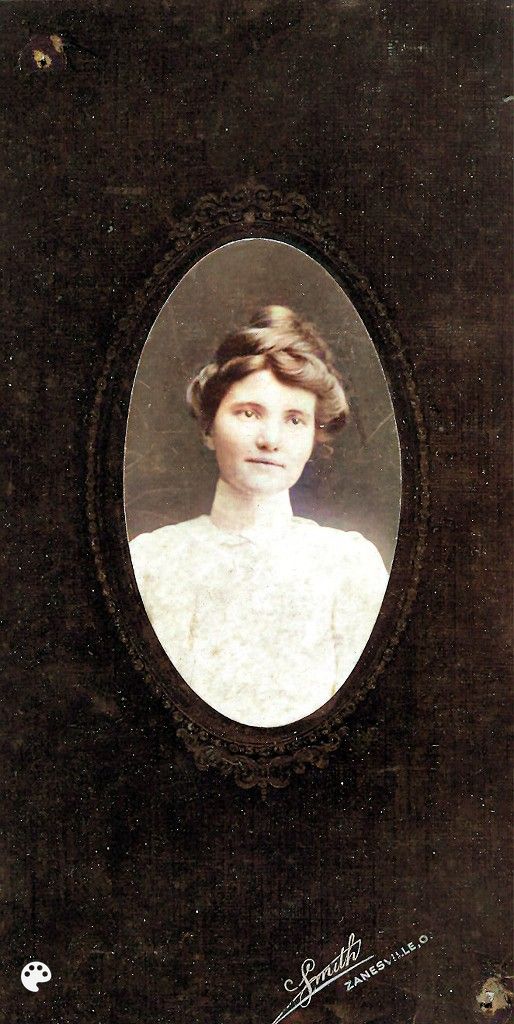
Bertie Armstrong McLean,
1876-1970


1. Backup your database. Most genelogy programs claim to backup your information automatically, and they do, but just as a precaution, at least once a month, do this manually. Also, if your budget allows, consider having your whole system backed-up on a server, such as Backblaze, an inexpensive and reliable (I've had to retrieve "lost" data from the server) cloud back-up/storage system. Best Cloud Backup Services for 2023

    2. Interview older relatives. This might be expanded to include neighbors or friends of your relatives who have passed. This is a resolution not to be put off. Trust me, you will kick yourself if you fail to do this. 

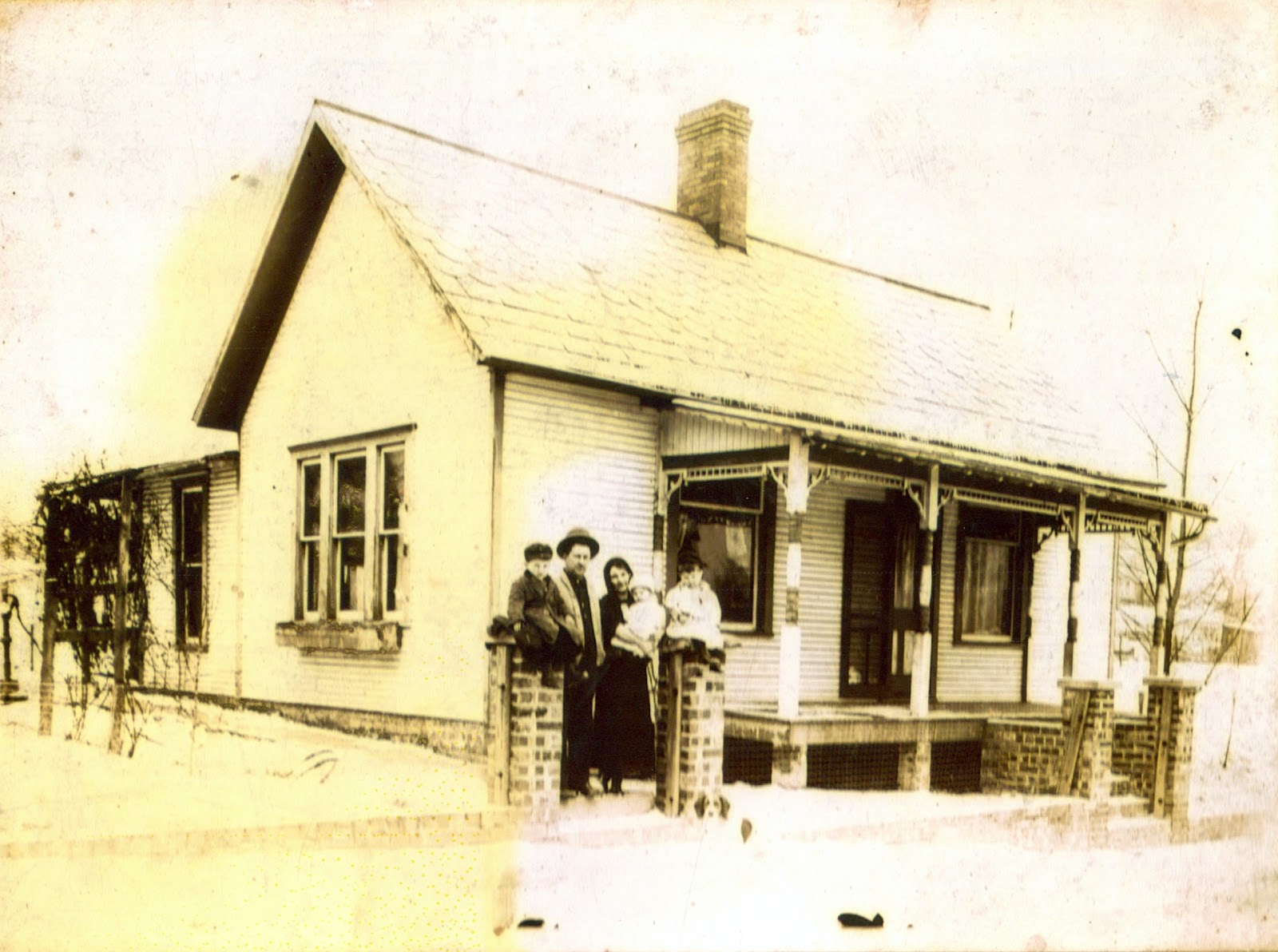
3. Make a road trip to places associated with your ancestors. This can be combined with interviews, but is a stand-alone resolution. Don't confine your explorations to cemeteries. There's nothing like the walking literally in the steps of an ancestor. Go see not just family homes (or the sites), but walk the streets of the town or nearby town and think about your ancestor walking there. Get a feel for what your ancestor saw and heard. Take photos (and then be sure you label them when you get home!). 
    If you can't make a road trip, use Google Earth to find an address. If there's a "street view", you'll be able to virtually follow in an ancestor's footsteps. It's actually pretty exciting.


McLean home, Roseville, Ohio, 1915
 

McLean home, Roseville, Ohio, 2015

3. Share your information. The best thing to do is to donate a copy of your genealogy to a local library and/or genealogy society. The Muskingum County Chapter of the Ohio Genealogical Society will gladly take a copy of your work. So will the Ohio Genealogical Society. So will The Allen County Public Library's Genealogy Center at Fort Wayne, IN. Don't use the excuse that no one in your family is interested. Someone in the family will be some day, and if you've donated your work to a repository, that someone can find it.
    And by the way, if you've had your DNA tested, you can use the results to identify 2nd and 3rd cousins (or their children) to whom you might offer your research. I did this with a branch of my mother's family, and now my research is in the hands of cousins I've never met and probably never will. Just knowing the work has been shared with some family member makes me feel good.


Monday, April 4, 2022

The 1950 US census--Help Wanted!

 The release of the 1950 US census is very exciting. However, if you've tried to search someone by name at the National Archives site, you've probably felt frustrated. Knowing your ancestor's enumeration district is critical, and if you don't have an address where the person lived in 1950, you can't determine the enumeration district. 

An every person name index is necessary. Unfortunately, a reliable one doesn't exist as of today. The National Archives has a computer-generated index (discussed in the previous blog), and like most such lists, it's seriously flawed. 

Family Search, Ancestry, and My Heritage are all working to provide a reliable every-name index, and they hope to have it online by May 14. Per the census bureau, there are 150,697,361 names to be indexed, so meeting the deadline is a challenge. 

But YOU can help.

As it did with the 1940 US census, FamilySearch is offering each of us a volunteer opportunity to be done from the comfort of our own homes---reviewing the OCR-generated names. Go to https://www.familysearch.org/getinvolved/1950 and you can start immediately. 

When you click on the link above, beneath the words "Indexed by computers, reviewed by people", you'll see a dropdown menu where you can choose a state to help index. As of today, you only have three choices, Oregon, Nevada. and Utah. Choose one, and you'll be taken to a screen with "Get Started" button. Click on that and it takes to a "Review Individual Names in the 1950 Census" screen. You don't need to enter a surname (unless you know someone in that state in 1950!); just press the search button. A census page image will appear. Part of a name will be highlighted in blue. The computer's "transcription" of the name appears in a box. You compare the highlighted name with the one in the box. If they match, click the match button. If you see an error, click the edit button and fix the transcription in the box then hit "Submit". If you're not sure, click the "Unsure" button. 

This sounds a lot more complex than it is. I did 40 names (with 12 corrections) in less than 10 minutes. I urge you to give it a try. If you only index 20 names, you've made it possible for 20 individuals to be found by family historians. The more of us doing this, the better the chance that in a month and a half, there'll be a reliable index to make all of our searches easier.

Thanks!


Wednesday, February 16, 2022

Finding Your People in the 1950 U.S. Census


There's a lot of excitement among family historians over the National Archive's April 1 release of the 1950 U.S. census. If you're one of those people eagerly anticipating this event, there are two things you need to do over the next two months to prepare. 

Legacy's census search tool
First, identify those in your family tree who were alive on or before April 1, 1950. Legacy Family Tree includes a Search feature that generates a list of people in the database who were alive during any particular census year--including 1950.  (I wasn't able to find if other genealogy software, such as RootsMagic or Family Tree Maker include a similar census search feature.) Once Legacy creates a list, you can save it as a spreadsheet, which then allows you to add additional columns of information, such as "Residence in 1950".
                                                                                                                                  
Knowing where an individual lived in 1950 is likely going to be critical to your search. So the second thing you need to do is locate an address (it might only be a street name) for each person or family. There are a number of resources, but telephone books will be especially useful. The Library of 
Congress has digitized a number of telephone directories Library of Congress U.S. Telephone Book Collection, Although the collection is not complete, you might just be one of the lucky ones. The address is needed to narrow your search to the Enumeration District where the family or individual lived, but even without an exact address, you can use Steve Morse One Step website to help locate likely E.D.'s Steve Morse One Step/1950 Enumeration Districts.

"My 1950 US Census Release To-do List"
from climbingmyfamilytree.Blogspot.com

Why, you're probably asking, do I need this information in order to search the 1950 census? It's because there's a possible problem with the index. Initially, the National Archives said there would be no index available at the time of the census' release. Then in December, we got the good news that there will be an index released on April 1. The potential problem lies with the fact that the indexing is being done not by humans but by a technology called Optical Character Recognition. While humans are fallible, so is technology, and indexing the 1950 census requires creating an OCR program that can "read" all the different ways in which census takers might have formed their letters as they recorded respondents' names.


You might recall the massive indexing effort done by FamilySearch for the release of the 1940 U.S. census. Over four months, 163,000 online volunteers tried to decipher good, bad, and ugly handwriting, but no one did it alone. If there were a problem reading a name, others could be called on to weigh in on the matter. An OCR program doesn't have another OCR program checking its work, so there's a lot of room for error. For example, if you know your Wilson relative was alive and well in Zanesville in 1950, you might be surprised when you can't find them in the index. That's because the OCR read the census taker's handwriting as "Nelson". 

So be prepared. Do your homework now so you can get right to work on April 1. Happy hunting.


Tuesday, December 28, 2021

Here's To You


May 2022 be a year of contentment, peace, and good health to you and yours.

Monday, June 7, 2021

The Farmers' Institute

Although Muskingum County is largely agricultural, its 21st century farm families are probably unaware of an educational organization of great importance to their late 19th and early 20th century farm ancestors. 


The Farmers' Institute was a product of the Hatch Act of 1887, which funded agricultural research through the establishment of "experimental stations" in connection with the land grant colleges. (Today these stations are known as Cooperative Extension Services.) The Hatch Act acknowledged that research without application has no real purpose, mandating in its first clause that the experimental stations were to share "useful and practical information on subjects connected with agriculture" to America's farmers. It provided a way to get vital agricultural information directly to farmers who didn't have the luxury of taking time off to attend formal college classes.

Rep. William H. Hatch of Missouri, who chaired the House Agricultural Committee, might have based his legislation on an informal movement that began in Massachusetts in 1839. That year, the Massachusetts legislature invited farmers to the State House to hear lectures and see demonstrations on the latest farming techniques. The event was so well-received that the idea spread, and farmers institutes were held in many localities for the next five decades. In 1872, Ohio began hosting farmers' institutes, with lectures and demonstrations provided by faculty of the Ohio Agricultural and Mechanical College (The Ohio State University) which had been founded two years earlier. 

The Farmers' Institutes usually met in the winter months for two to seven days of instruction.  Participants were expected to have a common school education and to have farmed for at least one year. In 1902, the number of Farmers' Institute attendees nationwide was 80 times the number of students enrolled in agriculture, dairying, veterinary science, and household sciences (home economics) courses in all the land grant institutions combined. By 1907, the popularity of Farmers' Institutes programs led railroad companies to finance and run special trains to carry the materials used by lecturers in their talks and demonstrations so that the practical applications of their research could be taught to an even larger audience. Why might the railroads have been so magnanimous? Better farming meant more crops to transport to more markets, helping railroads turn even larger profits.

The immense popularity of the Farmers' Institutes led to the creation of women's institutes auxiliaries, and then to youth institutes. Women's institutes were managed and taught by women, and covered topics such as "home conveniences" and "the handy kitchen". The goal of youth institutes was teach rural students who had recently left school (usually at the end of 8th grade) how to make money from farming, in the hopes they wouldn't look to the city for opportunity. Farm record-keeping was an important youth institute course of instruction. 

A search of Zanesville's local papers online for the years 1895-1920 turned up dozens of articles about Muskingum County Farmers' Institutes. They are fun to read, not just for the chance appearance of local people's names, but for the topics that drew our ancestors to attend these events. The institute held at New Concord in February, 1898 featured a women's program with topics such as "Washday in the Farm Home", "Vegetarian Diet", and the curious "Etcetera". Is it possible one of your female ancestors was in the audience?


Resource:

Moss, Jeffrey W., and Cynthia B. Lass. “A History of Farmers' Institutes.” Agricultural History, vol. 62, no. 2, 1988, pp. 150–163. JSTOR, www.jstor.org/stable/3743290. Accessed 8 June 2021.


Friday, May 7, 2021

Enhancing Your Family History


 I recently attended (virtually, of course) the Ohio Genealogical Society's annual conference. There were several presentations on how to use online resources, such as JSTOR (JournalStorage),  HathiTrust Digital Library, and Internet Archive. The sites are dedicated to digitizing millions and millions of pages of research publications from around the world. Although not dedicated to genealogy, these websites can provide the family historian with some interesting insights into the lives of the ancestors.

For example, if you found that one or several people in your family died during one of the three cholera epidemics that hit the U.S. between 1832-1866, you might want to know something about the progression and treatment of communicable disease in the first half of the 19th century. Believe me. SOMEONE has researched that meticulously and written about it! 


The presentations got me interested in exploring online sites for local or specialized histories. I found a virtual museum dedicated to the work and lives of Nottinghamshire framework knitters (Framework Knitters Museum), a site providing historic photos and maps of the city of Philadelphia, (Philly History), and one online site that's really close to home--Ohio Memory

Ohio Memory is a collaborative program of the Ohio History Connection and the State Library of Ohio. You can browse by contributor, place, subject or time periods. I browsed the places category using "Muskingum County" and "Zanesville", but I could have browsed by any number of place names, including names of institutions or cemeteries. You can browse by different formats so you can narrow the results to pictures or maps, but I just was interested in general results. There are brochures and programs, letters from individuals, newspaper clippings. You can save or download an item, although there are restrictions on how you can use it. Each item includes a description, and where the original is located. Letters and print materials have been transcribed, and the transcription is available as a pdf file.

If you're looking for ways to enhance your family history so that it's more interesting to those people in the family you're trying to "hook", start surfing some of the many sites that offer digitized materials, or that take you on virtual tours. Photographs are especially eye-and interest-catching, so incorporate them whenever possible. Flickr is a great site to find photos of areas your family came from, no matter how obscure. I once did a family history for a friend whose grandparents came from a tiny, tiny village, Celle di San Vito, in Italy. Someone has photographed the village extensively, and posted the photos at Flickr. Many people who upload photos to Flickr allow them to be downloaded for personal use, and I was able to illustrate my friend's family history with some beautiful photos. She cried. So look for and include lots of illustrations in your family history. If you can bring tears to some family member's eyes--you'll have hooked them on genealogy.

Photo of the church at Celle di San Vito downloaded from Flickr