Friday, January 5, 2024

Licking Township

 There is no existing record of the exact date of the formation of Licking Township. According to The Biographical and Historical Memoirs of Muskingum County (published by Goodspeed Publishing Co., 1892), the township "was organized before 1806 from the Virginia military land."  Many of the earliest settlers, like Enos Devore and his father John, were Virginians. The above history says the Devores were the first known settlers in what would become Licking Township, arriving in 1801. Among the early settlers were Virginian Quakers, such as the Claypool family. The township was named for the river that runs through it.

A stage coach stop in Irville
If the township's approximate founding date is correct, at least seven years of township records documenting elected officers, jurors, justices of the peace, tax records, etc. have been lost. The earliest known township document is a portion of a tax book dated June 3, 1813. We have to assume that leadership in the township's early years was assumed by large landowners and business operators.

Licking Township's two main "population centers" were the villages  of Irville, platted in 1814, and Nashport, platted in 1827 to be a "port" along the newly opened Ohio Canal. Pleasant Valley, a third population center, was located on the opposite side of the Licking River from Irville and Nashport. With the founding of Irville came the township's first schoolhouse, and a Presbyterian church which was first frame building in the township.  A stagecoach route connecting Columbus and Zanesville ran through the area, and a couple of taverns served tired and thirsty travelers, as well as the locals.

In the 1960s, the construction of Dillon Dam erased Irville, Nashport, and Pleasant Valley, as well as several smaller township communities, off the map. Families were displaced and homes and stores were torn down. Bodies were exhumed from cemeteries and reinterred elsewhere. Some buildings from the original villages were moved to "New" Nashport, the township's only current-day population center. 

A detailed history of the three lost population centers, can be found in Before Dillon: Memories of the Lost Villages of Nashport, Irville, and Pleasant Valley by Rose Ellen Jenkins and Mari McLean. The book is available for purchase at the MCCOGS Market Place http://mccogs.org/sales.html


Saturday, November 4, 2023

Jefferson and Cass Townships

                      Jefferson Township
The section of Muskingum County now known as Jefferson and Cass Townships was originally home to people of the Shawnee Nation. (The village of Dresden in Jefferson Township would later be founded on the remains of the Shawnee village of Wakatomika.) A military campaign  known as "Lord Dunmore's War" began to displace the native people from the area in 1774; "Mad Anthony" Wayne's victory at the Battle of Fallen Timbers in 1794 completed the forced removal of native peoples from the Ohio Territory, opening the territory to white settlement. The first known white settlers in Jefferson--and Cass--Townships were the Priests from Virginia, James Wilcox, James and Phineas Sprague and Isaac Cordray. Major Jonathan Cass, a veteran of the Revolutionary War, came in 1801 and bought up 4,000 acres along the Muskingum River. Cass hoped his settlement would become the county's seat, but it lost out to the older settlement of Zanesville.

                Cass Township
Jefferson Township was was officially organized in April 1805, when the first election of township officers was held at the home of Henry Northrup. In 1817, the town of Dresden was established by Philadelphians whose families had emigrated from Dresden, Germany. 1833, the area had one church, two flour mills, three sawmills, and six physicians. 

Undoubtedly hoping to grow the Dresden area, Jefferson Township held a special election in 1852 to issue $100,000 (about $360,000 today) in bonds to the Steubenville & Indiana Railway to construct a rail-line through the village. A literal "town and country" argument ensued between the township's farmers, who didn't want assume the tax liability for the bonds,  and the residents of Dresden who did. On September 6, 1853, the disagreement led to the division of Jefferson into two townships, Jefferson (half of which is the village of Dresden) and Cass. The farmers of newly formed Cass Township expected the division would allow them to avoid the taxation resulting from the bonds purchase. It didn't. And to add insult to Jefferson's injury, the railway line ended up being situated one and a half miles north of Dresden, so its residents never saw the hoped-for return on their investment. 

Today, Cass township remains almost completely rural with a population in 2020 of 1,811 people. Its only population areas are a small portion of the village of Dresden, and two unincorporated communities, Adams Mills and Trinway. The tiny township of Jefferson has a population of 1,974, with the majority (1,654) living in Dresden. 


Friday, March 10, 2023

Springfield Township


Springfield Township was formed from Muskingum County's first township, Newton, on June 21, 1803. Ohio had just been admitted to Statehood on March 1 of that year. However, white settlement had begun along the junction of the Licking and Muskingum Rivers as early as the late 1790's. Col. Ebeneezer Zane directed the creation of a primitive road from Wheeling, West Virginia to Maysville, Kentucky during 1796-1797 to encouragement white settlement in the Northwest Territory and in the new state of Kentucky. The settlement of Westbourne, which was renamed Zanesville, grew up as a waypoint along "Zane's Trace," which is also known as the Maysville Pike. Col. Zane received a land grant of 640 acres in return for building the road. Rufus Putnam, Increase Matthews, and Levi Whipple purchased land across the river from Zanesville in 1801, and laid out the settlement of Springfield, which was renamed Putnam in 1814. The two thriving river settlements drew large numbers of settlers to the area, and growth was rapid.

Some "facts" of Springfield Township's settlement from the Everhart publication, History of Muskingum County are:

  • According to the Everhart book, David Stokely was the first white settler to build a cabin in the area that would become Springfield Township (1799). However, a more reliable source (Muskingum County Ohio USA) names Henry Crooks and William McCulloch, who operated ferries across the Muskingum River, as the original settlers.
  • The first trustees were Dr. Increase Mathews, John Mathews, David Harvey, and Isaac Zane; other township offices established were overseer of the poor, fence viewer, appraiser of houses, lister of taxable property, supervisor of roads, and constable.
  • Dr. Increase Mathews, clearly a jack-of-all-trades, was not only the first physician in the area, he also was the first merchant, and he raised fine-wooled sheep.
  • Jacob Reagan was the first blacksmith. In addition to the usual blacksmithing work, Reagan did a brisk business making cowbells and horsebells, that enabled settlers to track their livestock when they wandered off into the woods.
  • The only newspaper ever published in the township itself was The Methodist Recorder. Is part of its name preserved in the name of the current-day Times Recorder?
  • The first Methodist congregation was organized in 1827, and the first church building in the township was erected in 1835
  • A lot of horse-thieving apparently happened in the township: The Springfield Association for the Recovery of Stolen Horses was organized in 1833.
Ferry boat about 1800

Saturday, February 18, 2023

Newton, Muskingum County's First Township


Newton Township was formed in 1802, one year before Ohio's Statehood, and two years before Muskingum County was formed from Washington County. White settlers had been filtering into the "Ohio Country" in ever increasing numbers following the end of the Revolutionary War, and the creation of the Northwest Territory (1783). The Shawnee Nation, the original settlers, joined the Northwestern Confederacy of Native American nations and resisted the encroachment on their lands for nearly 10 years. Their defeat at the Battle of Fallen Timbers in 1794, and the signing of the Treat of Greenville forced the Native peoples to move further west. A flood of white settlers into the area began from that point.

Much of what we know--or think we know--today  about Newton's (and all other townships') early history comes from History of Muskingum County, Ohio, published by J. F. Everhart & Co. in 1882, and Biographical and Historical Memoirs of Muskingum County, Ohio, published by The Goodspeed Publishing Co., in 1892. While there are nuggets of real history to be found in both books, there is also fictionalized "history." County histories became very popular in the late 19th century, and local families would "subscribe" in order to get their family's name and story into a book. Wanting to portray themselves and their ancestors as pillars of the community, some family members couldn't resist embellishing the facts--or just plain making them up. So if you consult these and other books of this period to find out about your family, don't take everything you read at face value.

Gladstone grist mill, White Cottage
With that in mind, the "facts" of Newton's early settlement include:

  • Jacob Smith from Loudoun County, Virginia was the first known white settler to buy land (1797) and build a cabin (1802). 
  • The first townships trustees were Benjamin Redman, John Beckwith, and Andrew Crooks.
  • Andrew Crooks built the first tavern in 1804, before the first road had been cut in the township (1805); he also provided land for the first schoolhouse as early as 1800.
  • Between 1802-1812, a number of mills sprang up along Jonathan's Creek, the major stream that ran through the township from southeast to northwest: Moses Plummer built the first grist mill and a sawmill; John Lenhart and Anthony Mauk established the first whiskey mill.
  • The first cemetery (now defunct) was located on land belonging to Benjamin Croy: Peter Fauley was the first burial (1815)
  • New Milford [Roseville] was laid out by Ezekiel Rose in 1812.* 
  • Uniontown [Fultonham] was laid out by John Porter and Henry Hummell around 1813. (East Fultonham came into being some years later with the advent of the railroad.)
  • Newtonville [White Cottage] took root around 1815.
  • Methodist Church circuit riders served the township prior to the organizing of permanent churches; Goshen Methodist Church near Roseville and Uniontown Methodist church were organized around 1830. No church buildings of any denomination were erected in the township
    This crockery piece sold for a modest
    $175, but one Rambo Pottery piece
    recently went for more than $8000
    before 1835.
  • Because of the quality of the clay soil in Newton, pottery-making became an important local industry from the township's early days. Almost all of the many potteries were "bluebird potteries",  family-owned and operated. (See the blog post Potters Here, There, and Everywhere) A few of the local potters, like Joseph Rambo, became very well-known, and today wares bearing Rambo's signature bring very high prices at auction. 


*Roseville straddles the boundary between Muskingum and Perry County, so if you're researching New Milford/Roseville ancestors, be sure to go to both county courthouses.


Sunday, January 22, 2023

A Little History of Muskingum County Townships

 One of the resolutions I made for 2023 is to provide readers with a brief history of each of Muskingum County's 25 townships. The county itself was formed from Washington County on January 7, 1804. Zanesville, the county seat, served as Ohio's capital from 1810 to 1812. According to "Ohio History Central" (Ohio History Connection), the county name derives from a Native American word meaning "near the river", referring to the Muskingum River that runs through the county. Wikipedia (Muskingum County, Ohio) offers other derivatives: A Shawnee word meaning "swampy ground"; a Lenape word referring to a thorn bush specific to the area; a Native word meaning "elk's eye" and referring to the number of elk that fed along the river's banks. Since there's no clarity on the meaning of the county's name, you're free to pick the one you like best.

Muskingum County's townships were formed between 1802 and 1853, in this order:

1.   Newton                Spring of 1802

2.   Springfield           21 June 1803     

3.   Jefferson              1805

4.   Licking                1806

5.   Falls                     9 March 1808

6.   Salt Creek            9 March 1808

7.   Union                   1808

8.   Blue Rock            3 December 1810

9.   Perry                    1812

10. Highland              11 March 1814

11. Rich Hill               8 March 1815

12. Jackson                 6 June 1815

13. Muskingum          7 June 1816

14. Brush Creek          10 Feb 1817

15. Hopewell              1 September 1817

16. Madison                2 July 1819

17. Monroe                 2 July 1819

18. Meigs                    13 July 1819

19. Salem                    July 1819

20. Washington           5 June 1822

21. Wayne                    Spring of 1826

22. Adams                    December 1826

23. Harrison                20 December 1839

24. Clay                      9 December 1841

25. Cass                      1853

The history of each of these townships will be presented in future blogs.


Saturday, December 31, 2022

Genealogy Resolutions for 2023

As a genealogist, you've probably given some thought as your research goals for 2023. If you're still thinking about what you'll do genealogy-wise in the New Year, there are plenty of suggestions from plenty of websites. Among those appearing on most websites are:

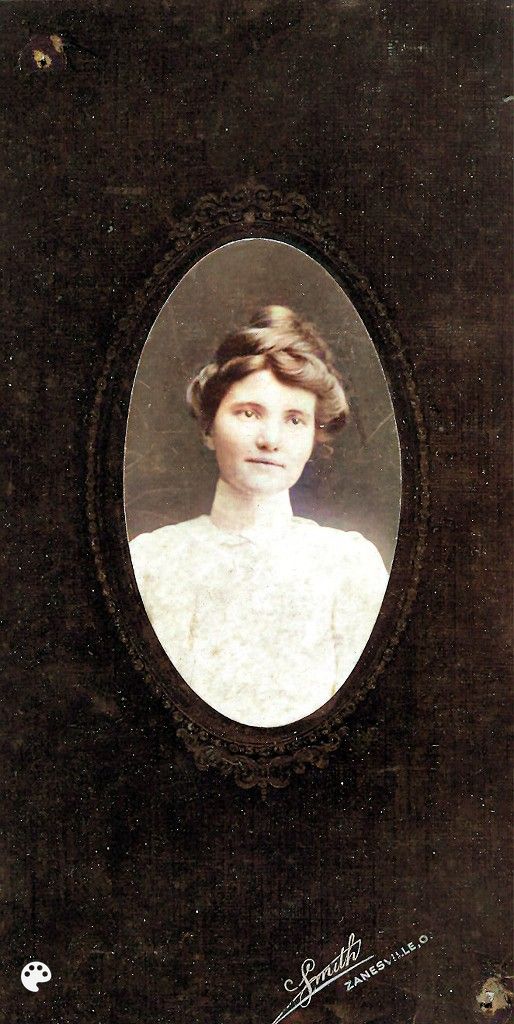
Bertie Armstrong McLean,
1876-1970


1. Backup your database. Most genelogy programs claim to backup your information automatically, and they do, but just as a precaution, at least once a month, do this manually. Also, if your budget allows, consider having your whole system backed-up on a server, such as Backblaze, an inexpensive and reliable (I've had to retrieve "lost" data from the server) cloud back-up/storage system. Best Cloud Backup Services for 2023

    2. Interview older relatives. This might be expanded to include neighbors or friends of your relatives who have passed. This is a resolution not to be put off. Trust me, you will kick yourself if you fail to do this. 

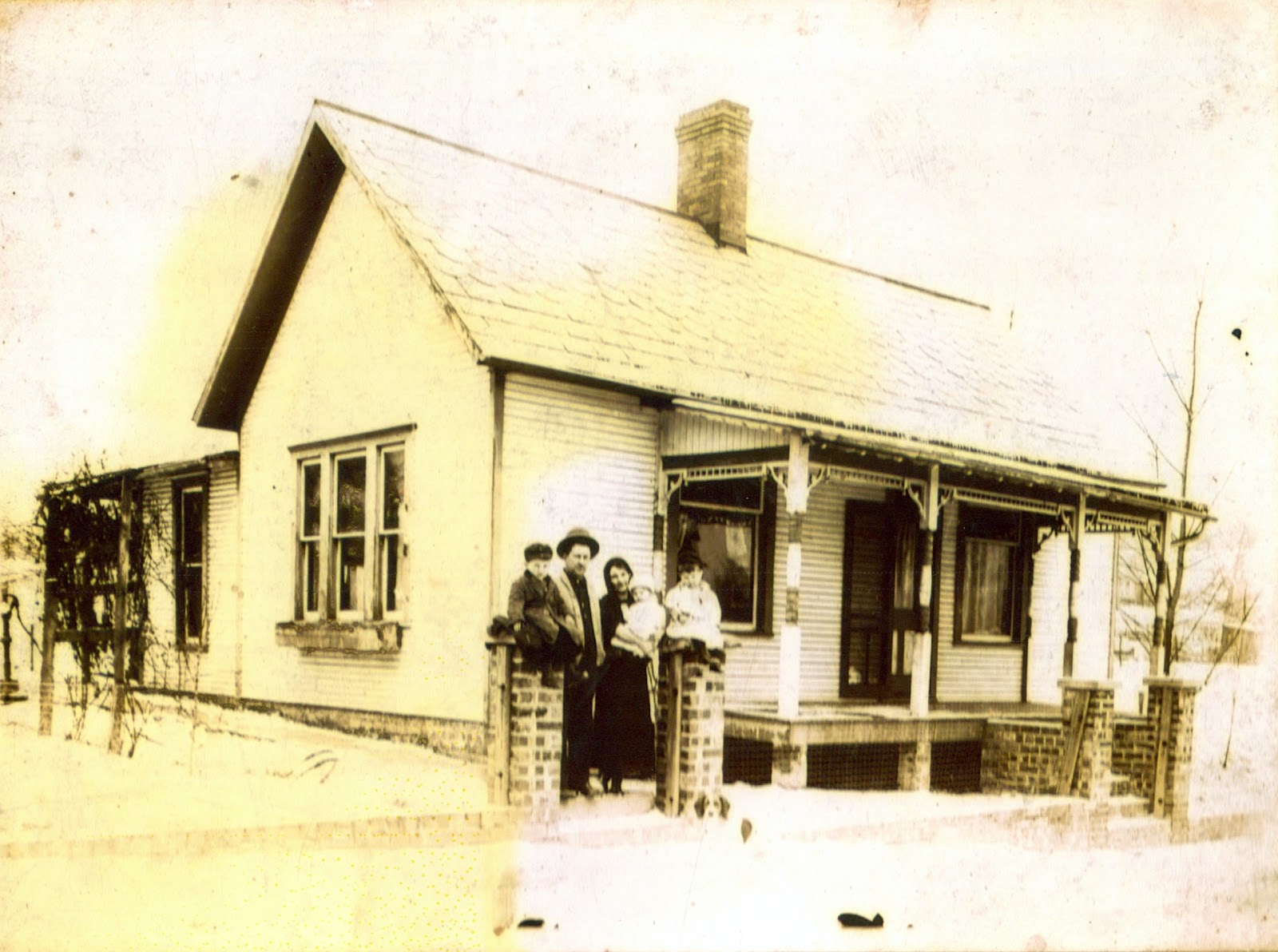
3. Make a road trip to places associated with your ancestors. This can be combined with interviews, but is a stand-alone resolution. Don't confine your explorations to cemeteries. There's nothing like the walking literally in the steps of an ancestor. Go see not just family homes (or the sites), but walk the streets of the town or nearby town and think about your ancestor walking there. Get a feel for what your ancestor saw and heard. Take photos (and then be sure you label them when you get home!). 
    If you can't make a road trip, use Google Earth to find an address. If there's a "street view", you'll be able to virtually follow in an ancestor's footsteps. It's actually pretty exciting.


McLean home, Roseville, Ohio, 1915
 

McLean home, Roseville, Ohio, 2015

3. Share your information. The best thing to do is to donate a copy of your genealogy to a local library and/or genealogy society. The Muskingum County Chapter of the Ohio Genealogical Society will gladly take a copy of your work. So will the Ohio Genealogical Society. So will The Allen County Public Library's Genealogy Center at Fort Wayne, IN. Don't use the excuse that no one in your family is interested. Someone in the family will be some day, and if you've donated your work to a repository, that someone can find it.
    And by the way, if you've had your DNA tested, you can use the results to identify 2nd and 3rd cousins (or their children) to whom you might offer your research. I did this with a branch of my mother's family, and now my research is in the hands of cousins I've never met and probably never will. Just knowing the work has been shared with some family member makes me feel good.


Monday, April 4, 2022

The 1950 US census--Help Wanted!

 The release of the 1950 US census is very exciting. However, if you've tried to search someone by name at the National Archives site, you've probably felt frustrated. Knowing your ancestor's enumeration district is critical, and if you don't have an address where the person lived in 1950, you can't determine the enumeration district. 

An every person name index is necessary. Unfortunately, a reliable one doesn't exist as of today. The National Archives has a computer-generated index (discussed in the previous blog), and like most such lists, it's seriously flawed. 

Family Search, Ancestry, and My Heritage are all working to provide a reliable every-name index, and they hope to have it online by May 14. Per the census bureau, there are 150,697,361 names to be indexed, so meeting the deadline is a challenge. 

But YOU can help.

As it did with the 1940 US census, FamilySearch is offering each of us a volunteer opportunity to be done from the comfort of our own homes---reviewing the OCR-generated names. Go to https://www.familysearch.org/getinvolved/1950 and you can start immediately. 

When you click on the link above, beneath the words "Indexed by computers, reviewed by people", you'll see a dropdown menu where you can choose a state to help index. As of today, you only have three choices, Oregon, Nevada. and Utah. Choose one, and you'll be taken to a screen with "Get Started" button. Click on that and it takes to a "Review Individual Names in the 1950 Census" screen. You don't need to enter a surname (unless you know someone in that state in 1950!); just press the search button. A census page image will appear. Part of a name will be highlighted in blue. The computer's "transcription" of the name appears in a box. You compare the highlighted name with the one in the box. If they match, click the match button. If you see an error, click the edit button and fix the transcription in the box then hit "Submit". If you're not sure, click the "Unsure" button. 

This sounds a lot more complex than it is. I did 40 names (with 12 corrections) in less than 10 minutes. I urge you to give it a try. If you only index 20 names, you've made it possible for 20 individuals to be found by family historians. The more of us doing this, the better the chance that in a month and a half, there'll be a reliable index to make all of our searches easier.

Thanks!